
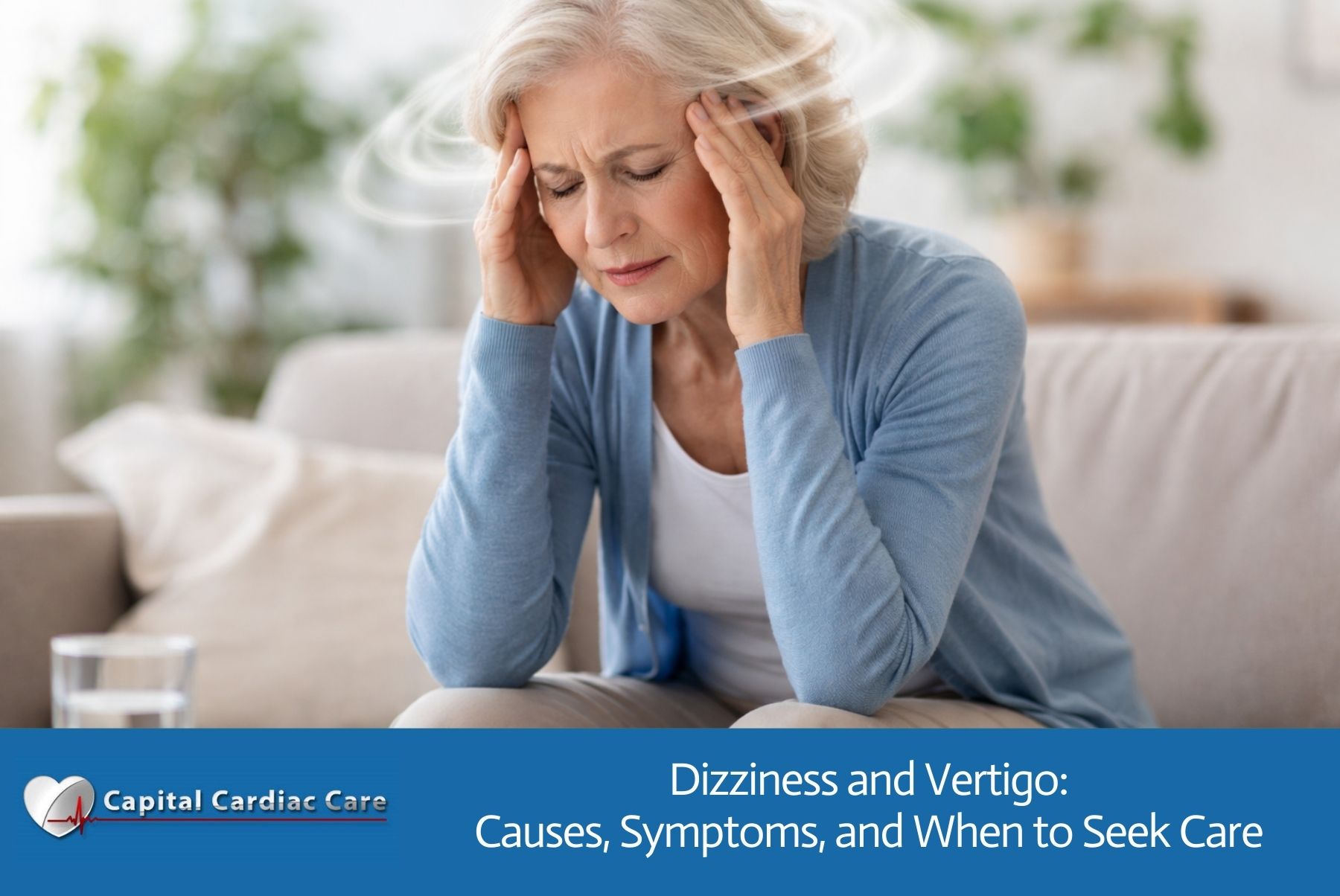
Feeling dizzy or as though the room is spinning can be unsettling—and sometimes alarming. While dizziness and vertigo are common complaints, they can stem from a wide range of causes, from inner ear issues to cardiovascular conditions. At Capital Cardiac Care, we believe that understanding your symptoms is the first step toward effective treatment and peace of mind.
What Is Dizziness?
Dizziness is a broad term used to describe sensations such as:
- Lightheadedness
- Feeling faint or weak
- Unsteadiness or loss of balance
- A floating or woozy sensation
Dizziness can be temporary or ongoing and may worsen with movement, standing up quickly, or exertion.
What Is Vertigo?
Vertigo is a specific type of dizziness characterized by a false sense of motion—often described as:
- Spinning
- Tilting
- Swaying
- Feeling like the room is moving
Vertigo is commonly related to problems in the inner ear or nervous system but may also be associated with blood flow or heart rhythm issues.
Common Causes of Dizziness and Vertigo
Dizziness and vertigo can be caused by many underlying conditions, including:
Inner Ear & Neurological Causes
- Benign Paroxysmal Positional Vertigo (BPPV)
- Vestibular neuritis or labyrinthitis
- Migraines
- Head injuries
- Stroke or transient ischemic attack (TIA)
Cardiovascular Causes
- Low blood pressure (hypotension)
- Heart rhythm abnormalities (arrhythmias)
- Reduced blood flow to the brain
- Heart valve disease
- Dehydration affecting circulation
Because cardiovascular issues can reduce oxygen-rich blood flow to the brain, dizziness may be an early warning sign that should not be ignored.
Symptoms That May Accompany Dizziness or Vertigo
- Nausea or vomiting
- Headaches
- Blurred vision
- Chest discomfort
- Shortness of breath
- Palpitations
- Fainting or near-fainting
If dizziness occurs alongside chest pain, fainting, or shortness of breath, immediate medical evaluation is essential.
When Should You See a Specialist?
You should seek medical care if:
- Dizziness or vertigo is frequent or worsening
- Symptoms interfere with daily activities
- You experience fainting, chest pain, or irregular heartbeat
- Dizziness occurs after physical exertion
- You have a history of heart disease, high blood pressure, or stroke
At Capital Cardiac Care, we evaluate dizziness with a heart-focused approach when appropriate, helping identify or rule out cardiovascular causes.
How Dizziness and Vertigo Are Diagnosed
Diagnosis may include:
- Detailed medical history and symptom review
- Blood pressure and heart rate assessment
- Electrocardiogram (EKG)
- Cardiac monitoring
- Imaging studies (if needed)
- Collaboration with ENT or neurology specialists
Our goal is accurate diagnosis and personalized treatment.
Treatment Options
Treatment depends on the underlying cause and may include:
- Medications
- Hydration and lifestyle adjustments
- Balance or vestibular therapy
- Heart rhythm management
- Blood pressure optimization
- Treatment of underlying heart conditions
Frequently Asked Questions (Q&A)
Q: Is dizziness always related to the heart?
A: No. Dizziness has many causes, but heart-related issues are an important possibility—especially if symptoms occur with exertion, palpitations, or fainting.
Q: Can anxiety cause dizziness or vertigo?
A: Yes. Anxiety and panic disorders can cause dizziness, but it’s important to rule out physical causes first.
Q: What’s the difference between lightheadedness and vertigo?
A: Lightheadedness feels like you may faint, while vertigo creates a sensation of spinning or motion.
Q: Can dehydration cause dizziness?
A: Absolutely. Dehydration can lower blood pressure and reduce blood flow to the brain, leading to dizziness.
Q: When is dizziness considered an emergency?
A: Seek emergency care if dizziness is sudden and severe, or accompanied by chest pain, fainting, confusion, weakness, or vision changes.
Q: How can Capital Cardiac Care help?
A: We specialize in identifying cardiovascular causes of dizziness and vertigo and provide comprehensive, patient-centered cardiac evaluations and treatment plans.
Contact Information
Capital Cardiac Care
📞 Phone: (301) 569-7135
🌐 Website: https://capitalcardiaccare.com
Office Locations
Gaithersburg Office
818 West Diamond Avenue, Suite 240
Gaithersburg, MD 20878
Columbia Office
6230 Old Dobbin Lane, Suite 250
Columbia, MD 21045