
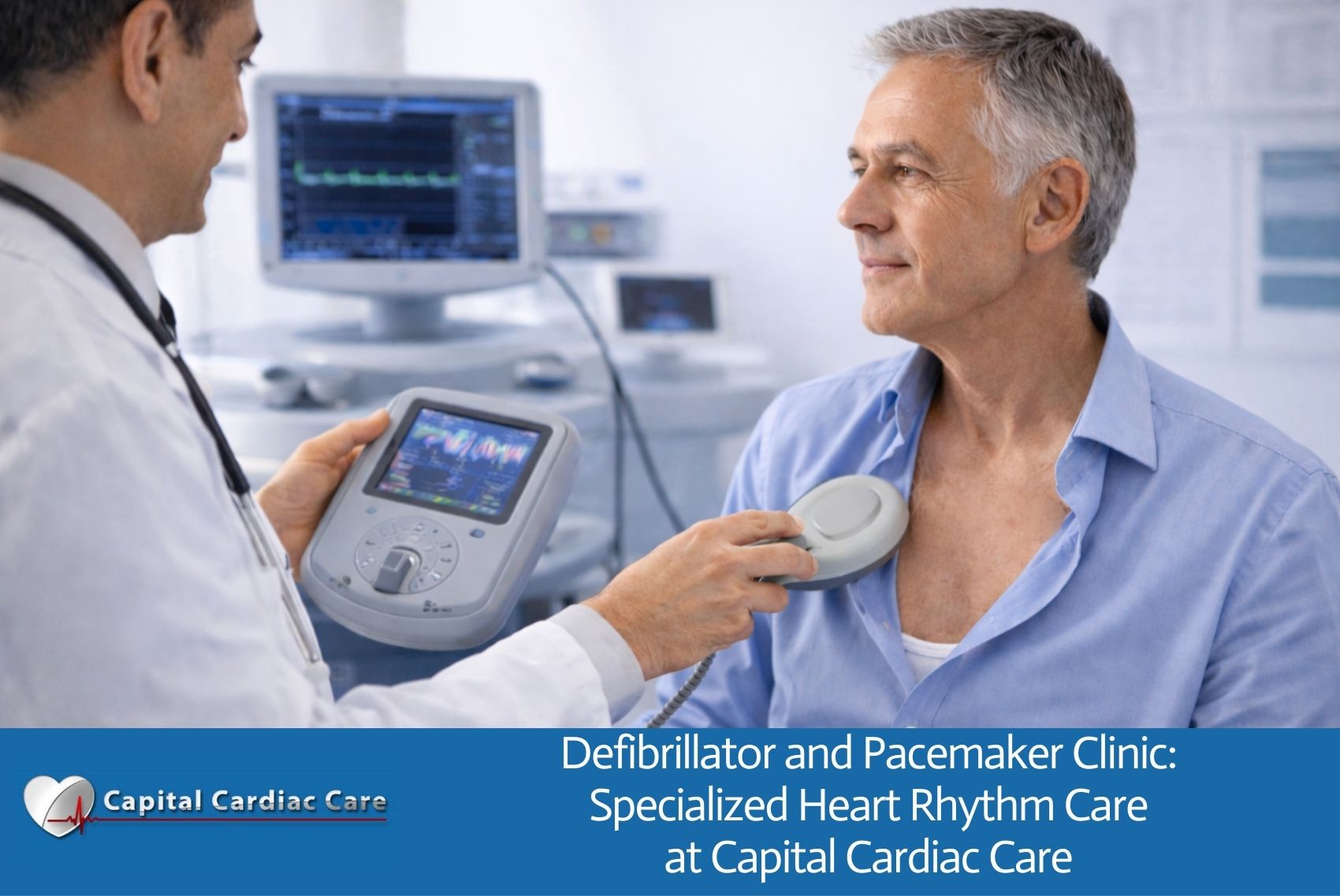
Heart rhythm disorders can be complex, but with the right monitoring and expert care, patients can live full, active lives. At Capital Cardiac Care, our Defibrillator and Pacemaker Clinic is dedicated to the long-term management, monitoring, and optimization of cardiac implantable electronic devices (CIEDs), including pacemakers and implantable cardioverter defibrillators (ICDs).
Our clinic combines advanced technology, specialized cardiac expertise, and personalized care to ensure each device is functioning optimally—giving patients confidence and peace of mind.
What Is a Defibrillator and Pacemaker Clinic?
A defibrillator and pacemaker clinic is a specialized service focused on patients who have implanted cardiac devices. These clinics provide regular follow-ups, device checks, troubleshooting, and education to ensure the device is supporting the heart safely and effectively.
At Capital Cardiac Care, our clinic plays a critical role in preventing complications, detecting issues early, and fine-tuning device settings to match each patient’s unique cardiac needs.
Types of Devices We Monitor
Pacemakers
Pacemakers help regulate slow or irregular heartbeats by sending electrical impulses to prompt the heart to beat at a normal rate.
Implantable Cardioverter Defibrillators (ICDs)
ICDs monitor heart rhythms and deliver life-saving therapy—such as pacing or a shock—when dangerous arrhythmias are detected.
Cardiac Resynchronization Therapy (CRT) Devices
CRT devices help improve heart function in patients with heart failure by coordinating the contractions of the heart’s chambers.
Services Offered at Capital Cardiac Care’s Device Clinic
Our Defibrillator and Pacemaker Clinic provides comprehensive, ongoing care, including:
- Routine in-office device checks
- Remote device monitoring
- Battery life and lead integrity assessments
- Adjustment of device settings
- Arrhythmia detection and review
- Symptom evaluation and correlation with device data
- Pre- and post-procedure device management
- Patient education and lifestyle guidance
We work closely with your cardiologist and electrophysiologist to ensure seamless, coordinated care.
Benefits of Regular Device Follow-Ups
Regular monitoring at a specialized clinic helps:
- Detect device or lead issues early
- Optimize device performance
- Reduce unnecessary hospital visits
- Improve symptom control
- Extend device longevity
- Enhance overall quality of life
Whether visits are in person or via remote monitoring, consistent follow-up is essential for long-term heart health.
Remote Monitoring: Care Beyond the Clinic
Many patients benefit from remote device monitoring, which allows your implanted device to securely transmit data to our clinic from home. This enables our team to:
- Identify abnormalities sooner
- Respond quickly to concerning changes
- Reduce the need for frequent office visits
Remote monitoring is safe, convenient, and an important part of modern cardiac care.
Frequently Asked Questions (Q&A)
How often should my pacemaker or ICD be checked?
Most devices are checked every 3–6 months, depending on the type of device, battery life, and your clinical condition. Some checks can be performed remotely.
Does a device check hurt?
No. Device checks are completely non-invasive and painless. They involve placing a specialized programmer over the device to read and adjust settings if needed.
What symptoms should I report to the clinic?
You should contact the clinic if you experience dizziness, fainting, palpitations, shortness of breath, chest discomfort, or if you receive a shock from your ICD.
Can I go through airport security with a pacemaker or defibrillator?
Yes. Patients can safely go through airport security, but should inform security personnel and avoid prolonged exposure to handheld metal detectors directly over the device.
How long do pacemaker and ICD batteries last?
Battery life typically ranges from 5–12 years, depending on the device type and how often it delivers therapy. Battery status is checked at every visit.
Will I feel my ICD deliver a shock?
If an ICD delivers a shock, most patients feel it. While it can be uncomfortable, it is life-saving and indicates the device corrected a dangerous heart rhythm.
Can I use household electronics and cell phones?
Yes. Most everyday electronics are safe. We recommend keeping cell phones at least six inches away from the device and avoiding strong electromagnetic fields.
What happens when my device battery is low?
Your device provides ample warning well before the battery is depleted. When replacement is needed, a minor outpatient procedure is scheduled to replace the generator.
Why Choose Capital Cardiac Care?
At Capital Cardiac Care, we prioritize patient safety, comfort, and education. Our Defibrillator and Pacemaker Clinic is staffed by experienced cardiac professionals who stay current with the latest advancements in device technology and heart rhythm management.
We are committed to helping you feel informed, supported, and confident in your care—every step of the way.
Contact Information
Capital Cardiac Care
📞 Phone: (301) 569-7135
🌐 Website: https://capitalcardiaccare.com
Office Locations
Gaithersburg Office
818 West Diamond Avenue, Suite 240
Gaithersburg, MD 20878
Columbia Office
6230 Old Dobbin Lane, Suite 250
Columbia, MD 21045