
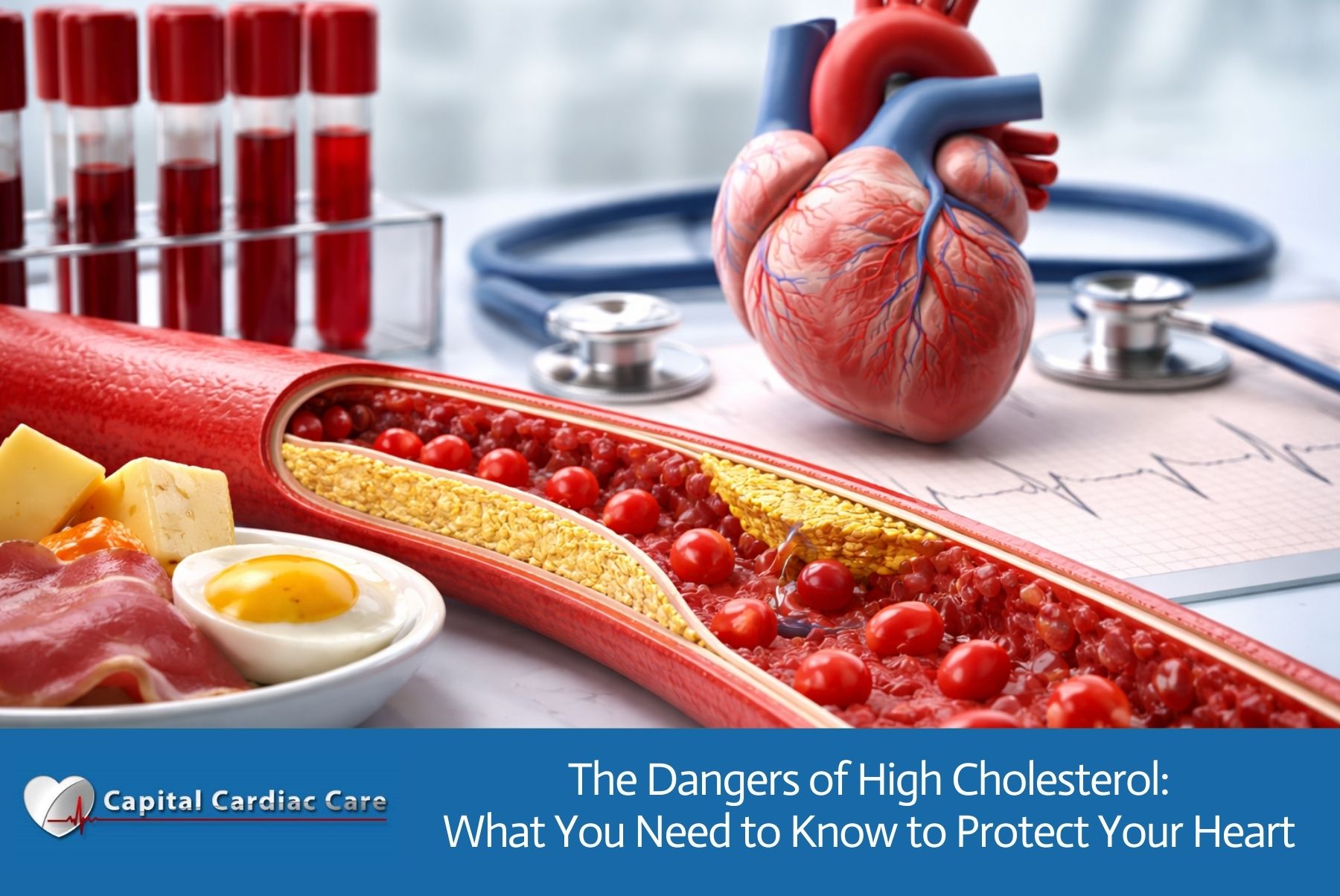
High cholesterol is one of the most common—and dangerous—risk factors for heart disease. Often called a “silent threat,” high cholesterol typically has no symptoms, yet it can quietly damage your blood vessels and significantly increase your risk of heart attack and stroke.
At Capital Cardiac Care, we believe that education is one of the most powerful tools for prevention. Understanding how cholesterol affects your heart, and knowing when to take action, can make a life-saving difference.
What Is Cholesterol?
Cholesterol is a waxy, fat-like substance found in your blood. Your body needs some cholesterol to build healthy cells, hormones, and vitamin D. However, too much cholesterol—especially the wrong type—can lead to serious cardiovascular problems.
There are two main types of cholesterol:
- LDL (Low-Density Lipoprotein) – Often referred to as “bad” cholesterol. High levels can cause plaque buildup in your arteries.
- HDL (High-Density Lipoprotein) – Known as “good” cholesterol. It helps remove excess cholesterol from the bloodstream.
When LDL levels are too high, cholesterol can accumulate along the walls of your arteries, forming plaque and narrowing blood flow.
Why High Cholesterol Is Dangerous
High cholesterol contributes directly to atherosclerosis, a condition where arteries become narrowed and hardened due to plaque buildup. This can lead to:
1. Heart Disease
Blocked or narrowed coronary arteries reduce blood flow to the heart, increasing the risk of chest pain (angina), heart attacks, and heart failure.
2. Stroke
When cholesterol plaques block blood flow to the brain—or when a plaque ruptures and forms a clot—it can cause an ischemic stroke.
3. Peripheral Artery Disease (PAD)
High cholesterol can restrict blood flow to the arms and legs, causing pain, numbness, and difficulty walking.
4. High Blood Pressure
Narrowed arteries force your heart to work harder to pump blood, which can lead to elevated blood pressure and additional strain on the cardiovascular system.
Who Is at Risk?
Anyone can develop high cholesterol, but certain factors increase your risk:
- Poor diet high in saturated and trans fats
- Lack of physical activity
- Smoking
- Obesity
- Diabetes
- Family history of heart disease
- Age (risk increases as you get older)
Because high cholesterol often has no symptoms, regular screenings are essential—especially if you have one or more risk factors.
How High Cholesterol Is Diagnosed
A simple blood test called a lipid panel measures your cholesterol levels, including:
- Total cholesterol
- LDL cholesterol
- HDL cholesterol
- Triglycerides
Your provider at Capital Cardiac Care can help interpret these results and determine whether lifestyle changes, medication, or further testing is needed.
Managing and Preventing High Cholesterol
The good news is that high cholesterol is highly manageable.
Lifestyle Changes
- Eat a heart-healthy diet rich in fruits, vegetables, whole grains, and lean proteins
- Limit saturated fats, fried foods, and processed snacks
- Exercise regularly (at least 150 minutes of moderate activity per week)
- Quit smoking
- Maintain a healthy weight
Medical Treatment
For some patients, lifestyle changes alone may not be enough. Cholesterol-lowering medications, such as statins, can significantly reduce cardiovascular risk when prescribed and monitored by a heart specialist.
Frequently Asked Questions About High Cholesterol
Q: Can I have high cholesterol even if I feel healthy?
Yes. High cholesterol usually has no symptoms, which is why regular testing is so important.
Q: Is high cholesterol genetic?
It can be. Conditions like familial hypercholesterolemia can cause high cholesterol even in people who eat well and exercise.
Q: How often should cholesterol be checked?
Most adults should have their cholesterol checked every 4–6 years. Those with heart disease or risk factors may need more frequent testing.
Q: Are cholesterol medications safe?
Yes. When prescribed appropriately and monitored by a cardiologist, cholesterol medications are safe and highly effective at reducing heart attack and stroke risk.
Q: Can diet alone lower cholesterol?
For some people, yes. For others, especially those with genetic risk, medication may also be necessary.
Q: What cholesterol numbers should I aim for?
Targets vary based on individual risk factors. A cardiologist at Capital Cardiac Care can provide personalized goals.
Take Control of Your Heart Health
High cholesterol doesn’t have to lead to heart disease. With early detection, expert care, and the right treatment plan, you can significantly reduce your risk and protect your heart for years to come.
At Capital Cardiac Care, our team is committed to providing comprehensive cardiovascular evaluations, advanced diagnostics, and personalized treatment plans focused on prevention and long-term wellness.
Contact Information
Capital Cardiac Care
📞 Phone: (301) 569-7135
🌐 Website: https://capitalcardiaccare.com
Office Locations
Gaithersburg Office
818 West Diamond Avenue, Suite 240
Gaithersburg, MD 20878
Columbia Office
6230 Old Dobbin Lane, Suite 250
Columbia, MD 21045