
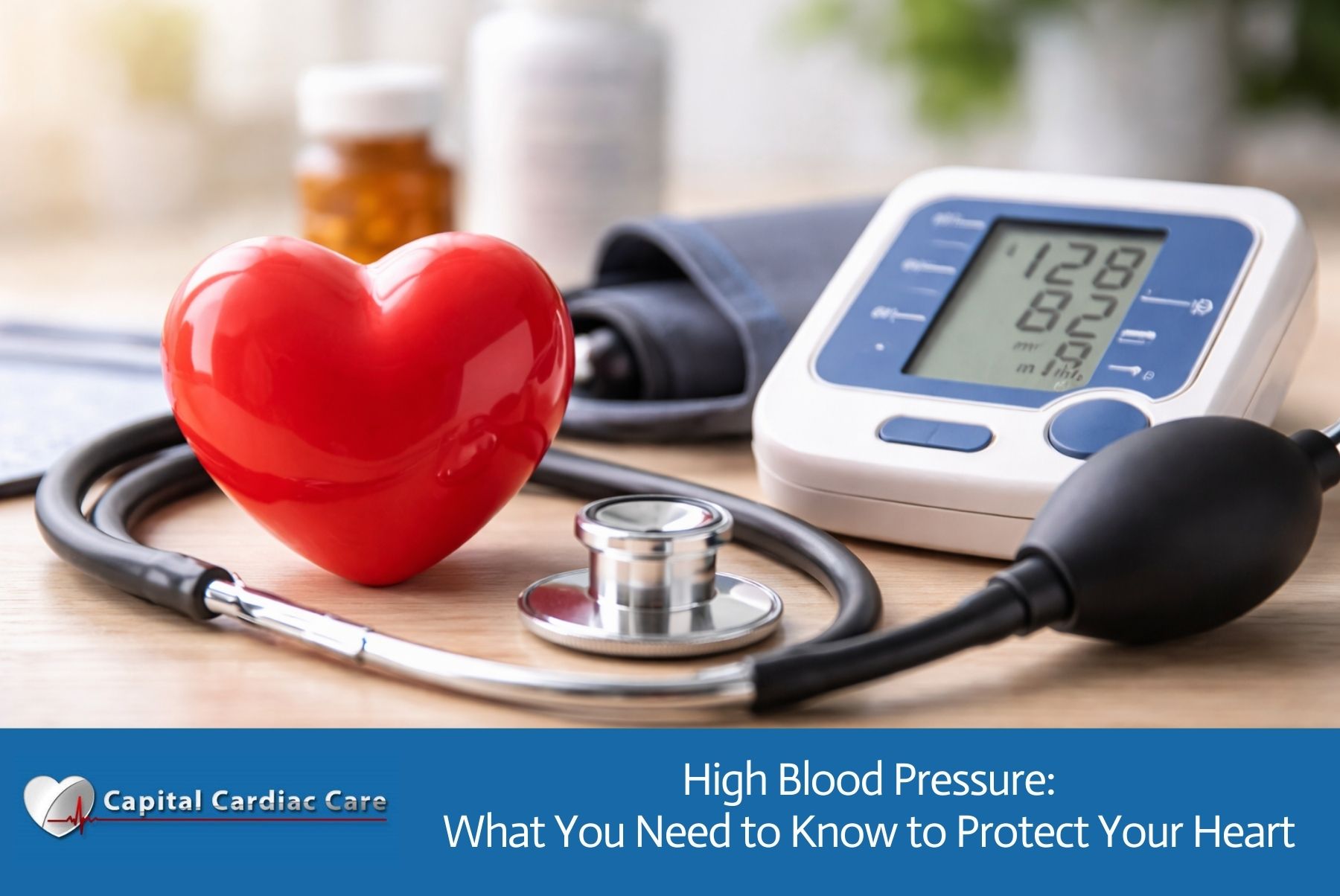
High blood pressure—also known as hypertension—is one of the most common and serious cardiovascular conditions affecting adults today. Often called the “silent killer,” high blood pressure can develop gradually and without noticeable symptoms, yet it significantly increases the risk of heart disease, stroke, kidney failure, and other serious health problems.
At Capital Cardiac Care, we believe that education is one of the most powerful tools for prevention. Understanding what high blood pressure is, why it matters, and how it can be managed is essential to maintaining long-term heart health.
What Is High Blood Pressure?
Blood pressure measures the force of blood pushing against the walls of your arteries as your heart pumps. It is recorded as two numbers:
- Systolic pressure (top number): Pressure when the heart beats
- Diastolic pressure (bottom number): Pressure when the heart rests between beats
High blood pressure is generally diagnosed when readings consistently exceed 130/80 mmHg.
Why High Blood Pressure Is Dangerous
When blood pressure remains elevated over time, it forces the heart to work harder than it should. This added strain can damage blood vessels and vital organs, leading to:
- Heart attack and heart failure
- Stroke
- Kidney disease
- Vision loss
- Peripheral artery disease
Because many people feel completely normal despite having high blood pressure, routine screenings are critical.
Common Causes and Risk Factors
Several factors can contribute to the development of high blood pressure, including:
- Family history of hypertension
- High-sodium or highly processed diets
- Lack of physical activity
- Excess weight or obesity
- Chronic stress
- Smoking and excessive alcohol use
- Diabetes and high cholesterol
Some risk factors, such as age and genetics, cannot be changed—but many lifestyle-related factors can be effectively managed.
Symptoms: Why It’s Often Called the “Silent Killer”
Most people with high blood pressure experience no symptoms at all. In more severe or prolonged cases, symptoms may include:
- Headaches
- Shortness of breath
- Dizziness
- Chest discomfort
By the time symptoms appear, organ damage may already be occurring, which is why regular monitoring is so important.
How High Blood Pressure Is Treated
Treatment plans are personalized and may include one or more of the following:
Lifestyle Modifications
- Reducing sodium intake
- Eating a heart-healthy diet (such as the DASH or Mediterranean diet)
- Exercising regularly
- Managing stress
- Quitting smoking
Medications
When lifestyle changes aren’t enough, medications may be prescribed to help control blood pressure and reduce cardiovascular risk. These are carefully selected based on each patient’s health profile.
At Capital Cardiac Care, we take a comprehensive approach—combining prevention, monitoring, and advanced treatment to support your heart health.
Frequently Asked Questions About High Blood Pressure
Q: How often should I have my blood pressure checked?
A: Adults should have their blood pressure checked at least once a year, or more frequently if they have risk factors or a previous diagnosis of hypertension.
Q: Can high blood pressure be cured?
A: While it may not always be cured, high blood pressure can almost always be controlled with the right combination of lifestyle changes and medical care.
Q: Is high blood pressure genetic?
A: Genetics can increase your risk, but lifestyle choices play a major role in whether hypertension develops and how severe it becomes.
Q: Does stress really affect blood pressure?
A: Yes. Chronic stress can contribute to sustained blood pressure elevation and unhealthy coping behaviors such as overeating or smoking.
Q: Should I monitor my blood pressure at home?
A: Home monitoring is highly recommended and can help track trends, assess treatment effectiveness, and provide valuable information to your healthcare provider.
When to See a Cardiologist
If you’ve been diagnosed with high blood pressure, have difficulty controlling it, or have additional risk factors such as diabetes or a family history of heart disease, seeing a cardiology specialist is an important step. Early intervention can significantly reduce long-term complications.
Contact Information
Capital Cardiac Care
📞 Phone: (301) 569-7135
🌐 Website: https://capitalcardiaccare.com
Office Locations
Gaithersburg Office
818 West Diamond Avenue, Suite 240
Gaithersburg, MD 20878
Columbia Office
6230 Old Dobbin Lane, Suite 250
Columbia, MD 21045