
By Capital Cardiac Care
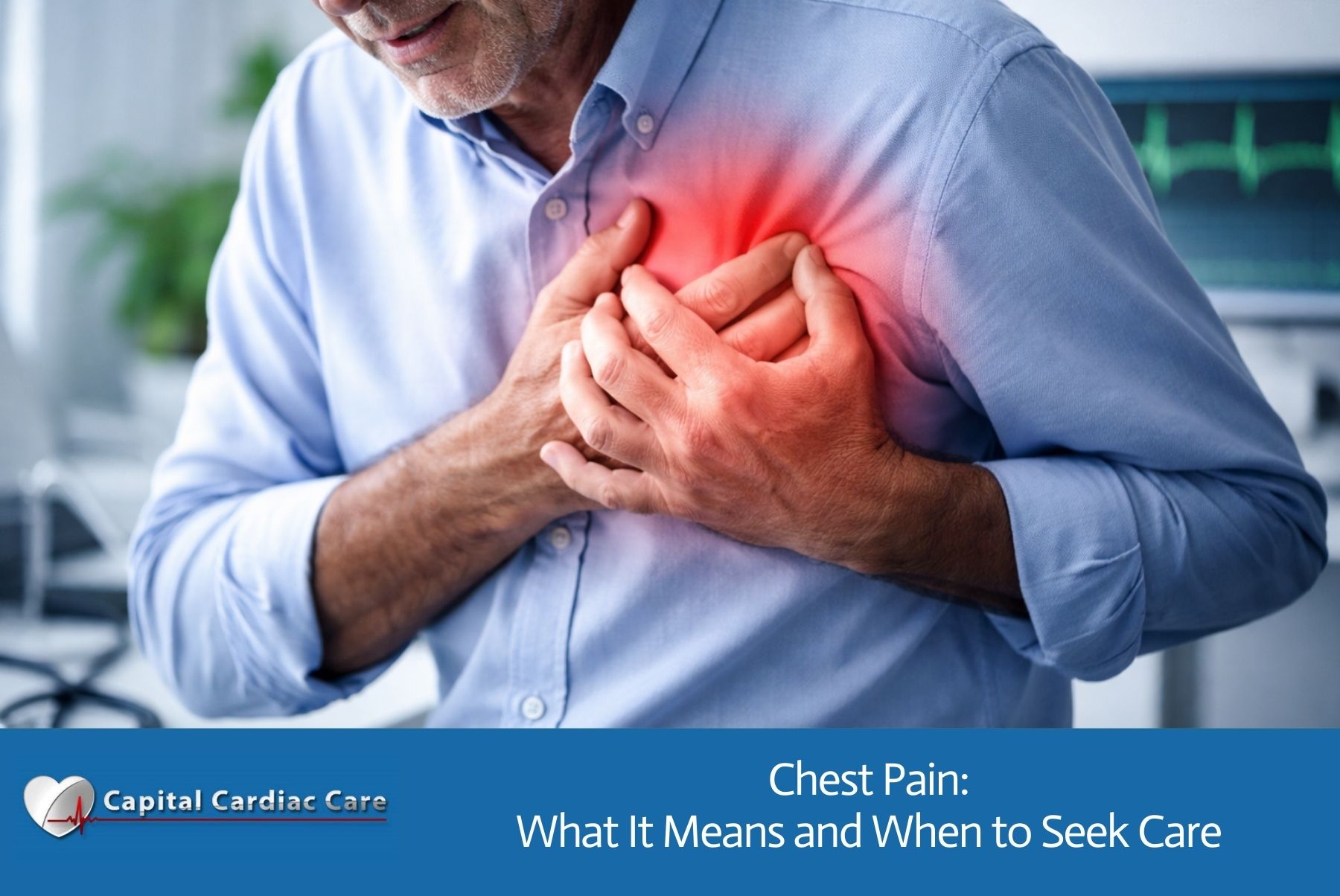
Chest pain is one of the most alarming symptoms a person can experience. For many, it immediately raises concern about the heart—and for good reason. However, not all chest pain is caused by heart disease. Understanding the possible causes, warning signs, and when to seek medical attention can make a life-saving difference.
At Capital Cardiac Care, we specialize in diagnosing and treating heart-related conditions with precision, compassion, and advanced cardiovascular expertise. This guide will help you better understand chest pain and how to respond to it.
What Is Chest Pain?
Chest pain refers to any discomfort felt in the chest area. It can range from a dull ache to sharp, stabbing pain or a tight, squeezing sensation. Chest pain may be brief or persistent, mild or severe, and may radiate to other parts of the body such as the arms, neck, jaw, back, or stomach.
Because the chest contains vital organs—including the heart, lungs, esophagus, and major blood vessels—chest pain should never be ignored.
Common Causes of Chest Pain
Cardiac (Heart-Related) Causes
These are often the most serious and require immediate medical evaluation:
- Angina – Reduced blood flow to the heart muscle, often triggered by exertion or stress
- Heart attack (myocardial infarction) – Blockage of blood flow to the heart
- Pericarditis – Inflammation of the lining around the heart
- Aortic dissection – A tear in the major artery leaving the heart (medical emergency)
Non-Cardiac Causes
While less dangerous, these can still be uncomfortable and concerning:
- Acid reflux (GERD)
- Muscle strain or chest wall injury
- Anxiety or panic attacks
- Lung conditions, such as pneumonia or pulmonary embolism
- Esophageal spasms
Only a medical professional can accurately determine the cause.
Warning Signs That Require Immediate Care
Call 911 or seek emergency care immediately if chest pain is accompanied by:
- Shortness of breath
- Nausea or vomiting
- Cold sweats
- Dizziness or fainting
- Pain spreading to the arm, jaw, neck, or back
- A feeling of pressure, squeezing, or heaviness in the chest
These symptoms may indicate a heart attack or other serious cardiac condition.
How Chest Pain Is Diagnosed
At Capital Cardiac Care, diagnosing chest pain may include:
- Detailed medical history and physical exam
- Electrocardiogram (EKG)
- Blood tests
- Stress testing
- Echocardiogram
- Advanced cardiac imaging
Our goal is to identify the cause quickly and accurately so treatment can begin without delay.
Treatment Options
Treatment depends on the underlying cause and may include:
- Medications to improve blood flow or reduce heart strain
- Lifestyle changes such as diet, exercise, and stress management
- Cardiac procedures or interventions when necessary
- Ongoing monitoring and preventive cardiology care
Chest Pain Q&A: Common Patient Questions
Q: Is chest pain always a sign of a heart attack?
A: No. While chest pain can be heart-related, many non-cardiac conditions can cause similar symptoms. However, it should always be evaluated by a medical professional.
Q: How can I tell the difference between heartburn and heart pain?
A: Heartburn often causes a burning sensation after eating and may improve with antacids. Heart-related pain may feel like pressure or tightness and can worsen with activity. When in doubt, seek medical care.
Q: Can anxiety cause chest pain?
A: Yes. Anxiety and panic attacks can cause chest pain, rapid heartbeat, and shortness of breath. Even so, cardiac causes must be ruled out first.
Q: When should I see a cardiologist for chest pain?
A: If chest pain is recurring, unexplained, or associated with risk factors such as high blood pressure, diabetes, smoking, or family history of heart disease, a cardiology evaluation is strongly recommended.
Q: What can I do to reduce my risk of heart-related chest pain?
A: Maintain a heart-healthy lifestyle: eat a balanced diet, exercise regularly, manage stress, avoid smoking, and follow up regularly with your healthcare provider.
Trust Capital Cardiac Care With Your Heart Health
Chest pain can be frightening—but you don’t have to face it alone. The experienced team at Capital Cardiac Care is dedicated to providing thorough evaluations, advanced diagnostics, and personalized treatment plans to protect your heart and your peace of mind.
Contact Information
Capital Cardiac Care
📞 Phone: (301) 569-7135
🌐 Website: https://capitalcardiaccare.com
Office Locations
Gaithersburg Office
818 West Diamond Avenue, Suite 240
Gaithersburg, MD 20878
Columbia Office
6230 Old Dobbin Lane, Suite 250
Columbia, MD 21045